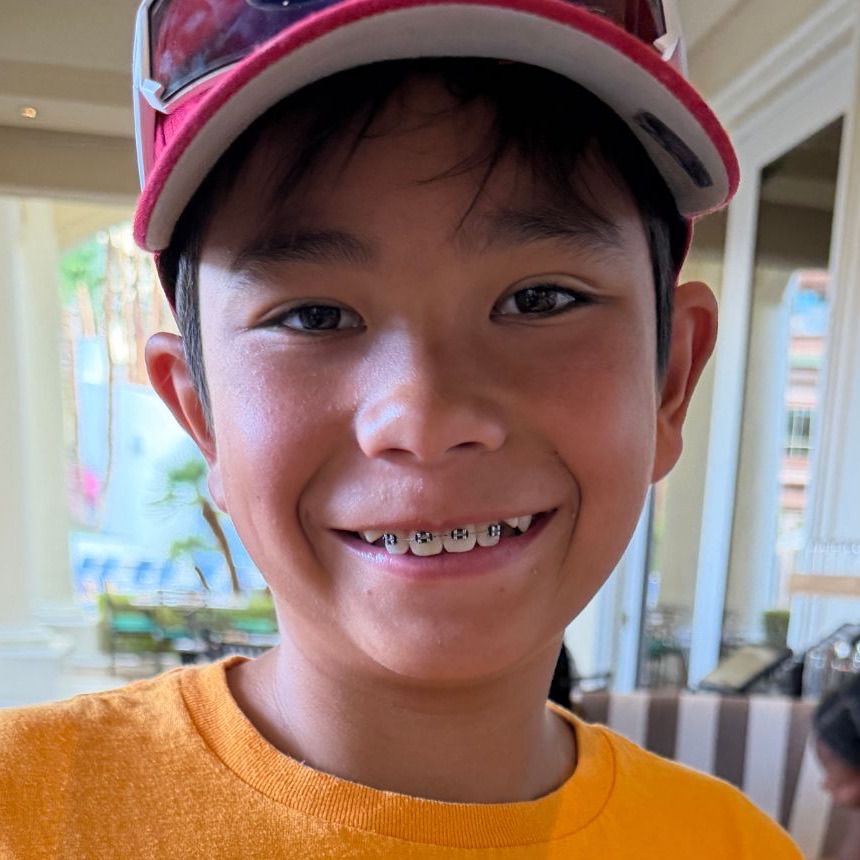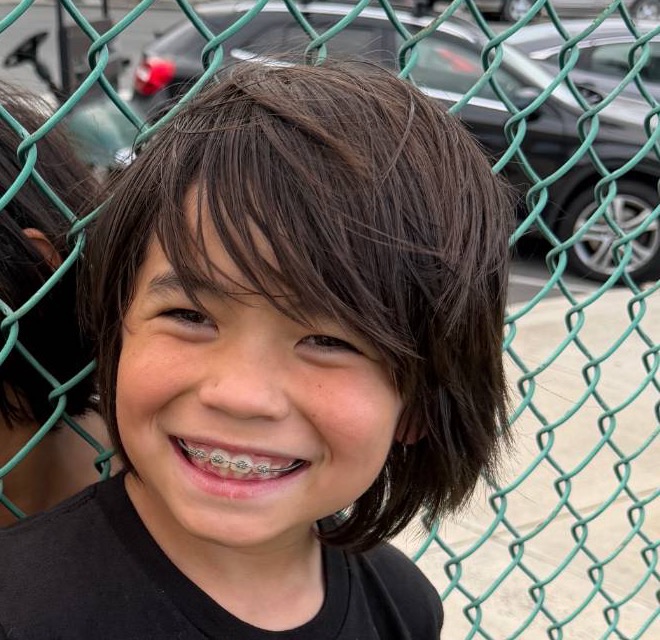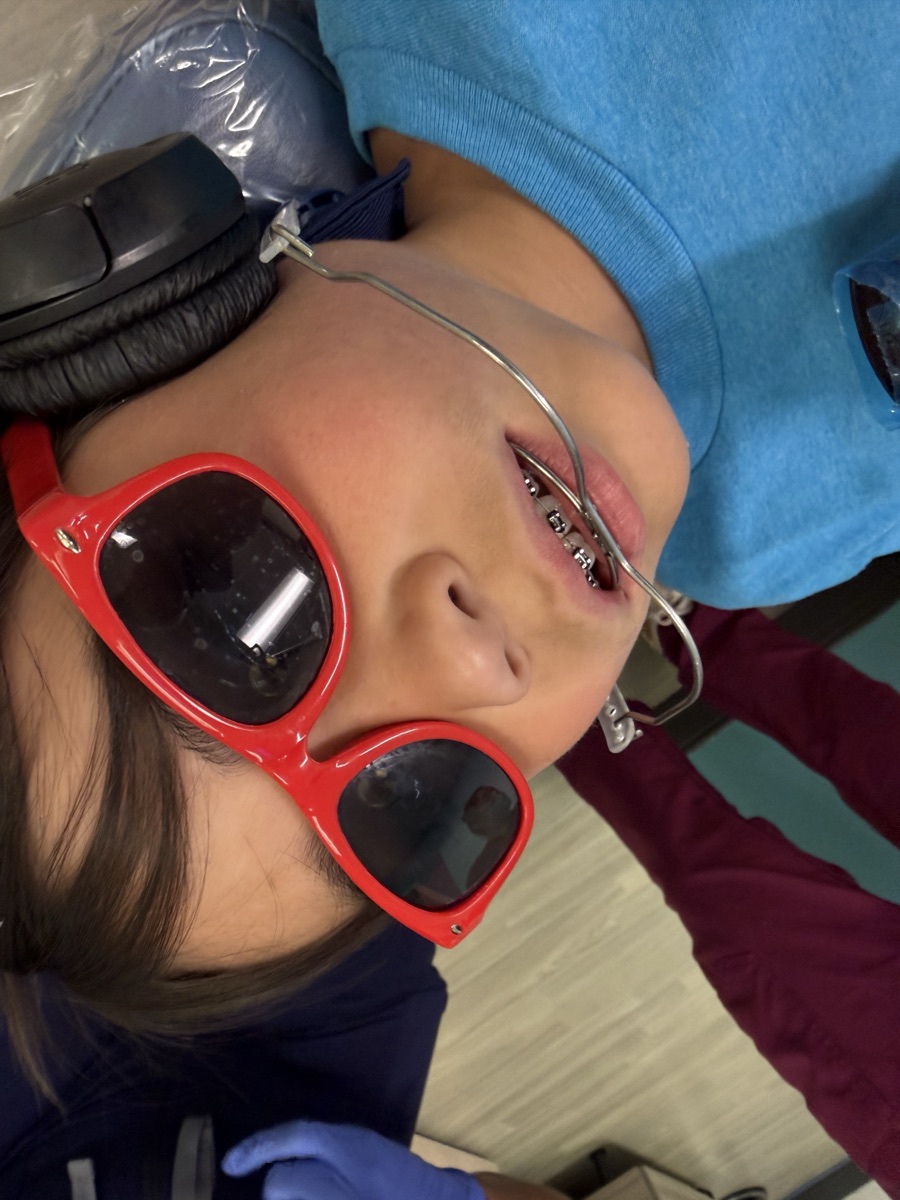
 Headgear isn't glamorous, and we know it. It's an old tool. In the right case it still works well, and my own son needed it.
We don't reach for it first
There are many ways to change how the upper and lower jaws relate, and we have a lot of tools. Headgear isn't our first pick. But once in a while the best tool is the old one.
Why a child might need it
Sometimes the jaws don't grow as fast or as fully as we need, so the upper and lower jaws don't match up.
I tell parents that teeth come together like gears. When the jaws line up, the teeth mesh and share the work. When they don't, the load lands in the wrong place or unevenly on the teeth, and over time that can lead to problems for oral health.
What a mismatch looks like
We look at your child's profile, not only their teeth.
- A straight profile is what we usually call ideal, or Class I.
- The lower jaw can sit back. Parents often call this an "overbite," but that isn't quite the right word. The lower jaw is further back than the upper one, and we may need to bring it forward or slow down the upper jaw.
- The upper jaw can grow too far forward, which gives the same mismatch.
- The lower jaw can grow too far out. Think of a strong, forward chin.
Plenty of kids have a mix of these.
What we do about it
We have many methods to bring the jaws into a healthy relationship. The goal is a good result for the bone and the profile, not just straight teeth. Sometimes the best appliance is headgear.
What the research says
The evidence is modest. A Cochrane review of early treatment for prominent upper front teeth included trials of early headgear treatment. In those trials, headgear reduced the overjet and improved the jaw relationship during the first phase. By the end of treatment there was no clear difference from starting later. Children treated early with headgear had fewer new injuries to their front teeth: 24 of 117 children, compared with 44 of 120 treated later. The review rated its certainty in these findings as low (Batista et al., Cochrane, 2018).
So headgear is one useful tool for the right child, not a cure-all. Your orthodontist decides based on how your child is growing.
When it was my own child
My biggest worry wasn't the appliance. It was whether my son would wear it. Even as a pediatric dentist, I wasn't sure he'd cooperate.
We decided to try it. After about three or four days of pouting, he was perfectly fine with it. I felt it was the best tool for his best result.
If your child needs headgear
- Expect some pushback in the first few days. It's normal, and in our house it passed.
- Your orthodontist will tell you how long and how often to wear it. Following that schedule is what makes it work.
- Tell us if something hurts or doesn't fit. We'd rather adjust it than have it sit in a drawer.
One team for your child
At Coastal Kids, your child's pediatric dentist and orthodontists plan together, and the same team follows your child over the years. We call it the Coastal Compass™. It lets us start at the right time, and tell you when it isn't time yet. You can read more in I Missed the Window for My Own Child's Braces and Is It Too Early for Braces?, or see our braces and orthodontic care.
Next step
If you wonder whether your child's jaws are growing in step, book an orthodontic check at Carmel Valley, Santee, Eastlake, San Diego or South Bay. The consultation is free and an orthodontist does it.
Dr. Chris Pham
Source
- Batista KB, Thiruvenkatachari B, Harrison JE, O'Brien KD. Orthodontic treatment for prominent upper front teeth (Class II malocclusion) in children and adolescents. Cochrane Database of Systematic Reviews 2018, CD003452.
This article shares one family's experience and general education, not a diagnosis. Every child is different, and your child's dentist and orthodontist will give advice that fits them.
Explore Our Services
Related Articles