The Coastal Compass: Our System for Thorough, Stage-by-Stage Care for Every Child

Every child who sits in one of our chairs is different — different temperament, different growth pattern, different mouth, different needs. So how does a practice make sure that nothing gets missed for any of them, at any age, at every single visit?
Our answer is a system we developed ourselves and use at every Coastal Kids office: the Coastal Compass. It is our proprietary framework for delivering truly comprehensive care — a stage-by-stage roadmap of your child's growth and development that guides what we examine, what we discuss with you, and what we plan for next. It was built over nearly four decades of practice, refined by some of the best practitioners in San Diego County and the country — leaders in our field, including professors and educators who teach these subjects to the next generation of dentists and orthodontists.
The Compass exists for two reasons: thoroughness and communication. Thoroughness, so that every visit systematically covers everything that matters for your child's stage of development — not just the reason you came in. Communication, so that you leave every appointment understanding what's happening in your child's mouth right now, what's coming next, and what windows of opportunity are opening or closing.
Children Are Not Small Adults — and Neither Are Their Teeth
This is the insight at the heart of the Coastal Compass. Adult dentistry mostly cares for a finished structure. Pediatric dentistry cares for a construction site: jaws that are growing, airways that are developing, baby teeth doing quiet but critical work, and permanent teeth queuing up underneath — all on a timeline that varies from child to child.
That means a great pediatric exam can't be a one-size-fits-all checklist. What we look for in a teething one-year-old is completely different from what we look for in a seven-year-old with a crowded smile or a twelve-year-old whose last baby teeth are finally on their way out. The Compass organizes all of it, so your child's visit is matched to their stage — and to the individual variations within that stage.
The Truth About Baby Teeth (They Stick Around Longer Than You Think)
One of the most common misconceptions we hear is that baby teeth "fall out early, so they don't matter much." In reality, baby teeth are on a much longer timeline than most families expect — the last ones, the second baby molars, typically aren't lost until around age 12, and sometimes 13. That means a cavity in a baby molar at age six isn't a tooth that's "about to fall out anyway." It's a tooth your child may need for another six or seven years.
Here's something else that surprises parents: some baby teeth are actually larger than the adult teeth that replace them. The baby molars are wider than the premolars that come in behind them. That extra width is not an accident — it's nature's built-in space reserve, and it helps the permanent teeth find room for a balanced bite. If a baby molar is lost too early, neighboring teeth can drift into that reserved space, and suddenly there isn't enough room for everything that still needs to come in.
This is why the Compass tracks every baby tooth's role in the bigger picture. When a baby molar is compromised or lost early, we act to retain that space — so your child keeps their best chance at an optimal, balanced bite with enough room for every tooth.
Opportunity Windows: Skating to Where the Puck Is Going
Growth creates windows of opportunity, and the Compass is designed to catch them while they're open.
When we notice a space deficiency early — a jaw that isn't developing enough room for the teeth still to come — we can intervene while the intervention is still simple. Early (interceptive) orthodontics uses appliances like palatal expanders to gently guide jaw growth while a child's bones are still soft and responsive. Create the room early, and teeth that would have been trapped or crowded can erupt into place naturally.
Most of today's parents didn't have this as kids — early orthodontics simply wasn't common practice a generation ago. It is now, because we've learned that catching growth issues while the bones are still adaptable produces better results with less invasiveness. We like to say we're skating to where the puck is going: treating the mouth your child will have in five years, not just the one in front of us today.
Yes, this sometimes means orthodontic treatment happens in two phases — an early phase to guide growth and make room, and a later phase to fine-tune alignment once the permanent teeth are in. But the trade is well worth it: children who get timely early intervention are far less likely to need extractions of healthy permanent teeth, impacted-tooth surgeries, or more invasive corrections later. The clinical results speak for themselves.
Dentistry and Orthodontics, Under One Roof, Reading From the Same Map
The Coastal Compass works so well partly because of how our practice is built: board-certified pediatric dentists and orthodontists working side by side in the same offices. Your child's dentist isn't guessing about orthodontic timing and referring you across town to find out — the orthodontist is down the hall, looking at the same records, growth history, and Compass roadmap.
That marriage of pediatric dentistry and orthodontics means eruption tracking, space management, habit guidance, and growth monitoring all flow into one coordinated plan. Nothing falls between two offices, because there's only one team.
What the Compass Looks Like at Your Child's Visit
You won't see a gadget or a brochure called the Coastal Compass — you'll see what it produces:
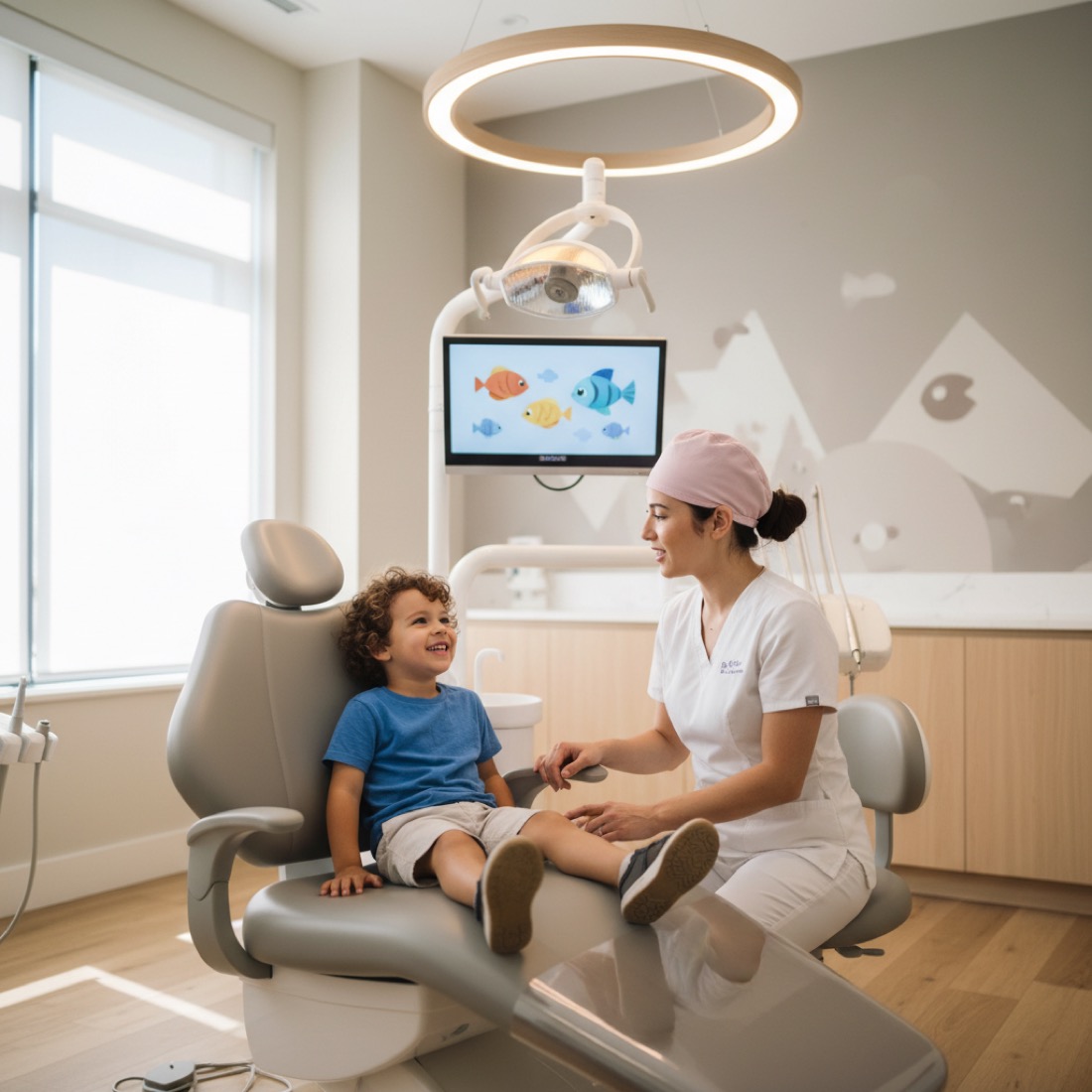
- A stage-matched, systematic exam. At every visit we assess the things that matter for your child's age and development: eruption sequence and timing, spacing and jaw growth, bite development, airway and habits, hygiene and cavity risk — the full picture, every time.
- Clear communication, in plain language. We tell you what we found, what it means, and what we're watching. You should never leave an appointment wondering what's actually going on.
- A look ahead. Because the Compass maps what comes next, we can tell you what to expect before it happens — which teeth are due, which windows are approaching, and when the right moment for each decision will be.
- A plan built for your child. Averages guide us, but your child isn't an average. Timelines, risk levels, and interventions are tailored to the individual kid in the chair — and to your family's priorities.
Four Decades In, Still Refining
The Coastal Compass isn't finished — by design. Every year of practice, every new piece of research, and every child we care for sharpens it further. That's the standard our founders and senior clinicians set, and it's the standard our whole team carries: stay students of the field, so that every family gets care informed by the best of what's known today.
Curious what stage your child is in and what windows are ahead? Bring them in — we'd love to walk you through their map. Schedule a visit at any of our San Diego locations.
Explore Our Services
Related Articles